The practical answer.
Identify every supply state that can drive current toward the primary coin cell, including external power, interfaces and foreseeable component faults. Use the selected manufacturer's approved isolation and protective arrangement, then verify both reverse-current control and the voltage available to the backup load. A low forward-drop component alone does not establish adequate reverse isolation, and primary cells must never be treated as rechargeable.
- Review reverse leakage at relevant temperature and voltage, not only a typical room-temperature value.
- Isolation components also consume forward voltage margin during backup operation.
- Manufacturer abnormal-charge information is not permission to intentionally charge a primary cell.
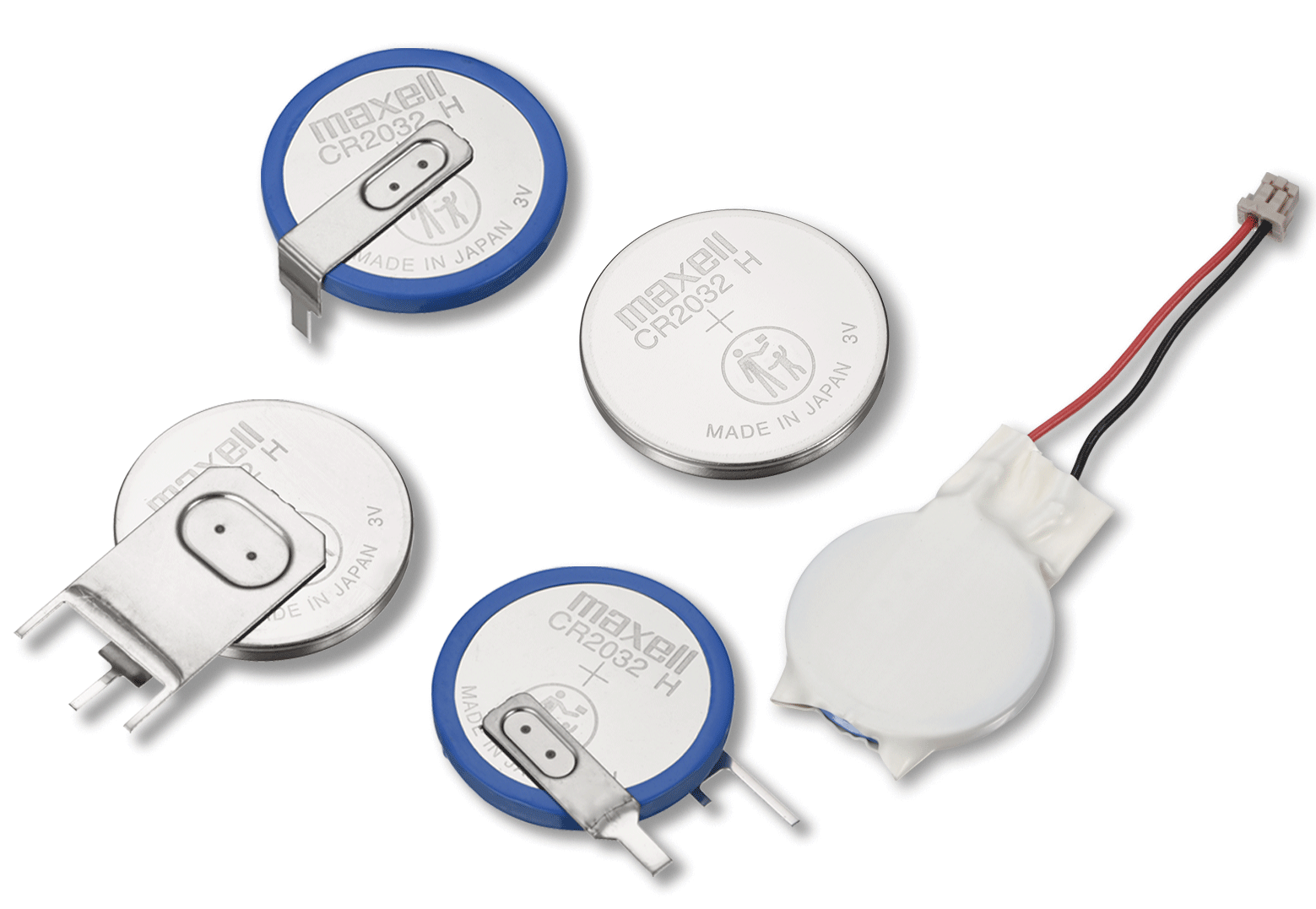
Draw power states as well as a nominal schematic
A backup design is often reviewed while its main supply is present, yet its purpose is to work when that supply disappears. Include main power on, off and transitioning, a connected programming interface, and any other allowed source. Show the direction current could flow in each state. A symbol labeled battery does not guarantee that the connected circuit only draws from it.
Check whether an external interface can keep a rail alive after the main source is removed. Consider the relevant IC behavior when one supply is absent while an input remains driven. These questions should be resolved from the actual component documents and measurements. They are not answered by choosing a CR2032 holder or by verifying the no-load voltage of a fresh cell.
Use the primary-cell manufacturer's isolation guidance
Panasonic's primary lithium handbook addresses reverse-current blocking and a protective series resistor where equipment could charge the battery. It also notes that reverse leakage depends on temperature. Those are manufacturer-specific design instructions that require the relevant model and circuit review. Do not transfer a numerical abnormal-charge limit from a different cell, or interpret a protective fault allowance as a normal charging mode.
Ask the design owner to consider component tolerances and foreseeable failure states, not only ideal diode behavior. An isolation device selected for low forward voltage can still have an unsuitable reverse-leakage characteristic for the intended condition. Conversely, extra series impedance may affect the voltage available to the backup load. The chosen solution must satisfy both requirements within the selected cell manufacturer's instructions and the equipment's validation plan.
| State | Reverse-current question | Backup-function question |
|---|---|---|
| Main supply present | Can another rail drive the cell? | Is backup load correctly powered? |
| Main supply absent | Are interfaces still a source? | Is useful voltage available under load? |
| Supply transition | Do transient paths appear? | Does the load reset or lose data? |
| Approved environmental extremes | How do leakage and tolerances change? | What forward margin remains? |
| Relevant component fault | Is protection still adequate? | What safe system behavior is required? |
Calculate leakage exposure without creating a charging allowance
A hypothetical steady reverse current of 0.2 microamp over five 365-day years corresponds to 8.76 mAh of charge flowing toward the cell: 0.0002 mA times 43,800 hours. This calculation demonstrates accumulation over time. It is not an approved leakage limit for CR2032, CR2025 or a Jetray-supplied product, and it does not establish that such charging is acceptable. Use worst-case relevant component information and manufacturer-approved criteria.
If the leakage varies with temperature or the external supply is present only part of the time, use a state-based exposure estimate instead of multiplying one typical value by the whole service period. Keep assumptions visible and determine which need measurement. A spreadsheet based entirely on room-temperature typical values cannot establish compliance with a worst-case equipment requirement. Record the actual components and revisions behind the analysis.
Check the forward-voltage budget independently
For a separate invented arithmetic example, suppose the loaded battery voltage under an approved condition were 2.40 V, the isolation drop 0.25 V and the remaining path drop 0.05 V. The load would see 2.10 V. If that load required 2.00 V, only 0.10 V would remain before other tolerances or transients. None of these numbers is a supplied-cell rating or a verified circuit result; they illustrate why reverse isolation cannot be reviewed in isolation from backup function.
Use a loaded condition rather than substituting the nominal three-volt label into every calculation. Include the device's actual retention or operating requirement, relevant current and environmental limits. A circuit may retain memory while being unable to run the main processor; clarify which function is required. Preserve the distinction between retention voltage, startup voltage and a software low-battery threshold.
Create evidence for sourcing and change review
Give the battery and equipment teams the schematic, component list, state table, intended environment and relevant observations. Ask for the actual proposed cell and current manufacturer documents. Jetray's CR2032 reference and coin-cell integration inquiry can support that discussion, but do not establish a stocked manufacturer, approved isolation network or permission to charge the cell. A family photograph cannot close those gaps.
When an isolation component or supported external interface changes, revisit the affected states and limits. Keep the prior configuration and reason for the change. A replacement that looks electrically similar in a summary table may differ in leakage, tolerances or unpowered behavior. Purchasing should therefore connect the approved cell and critical circuit configuration to the product release record instead of approving substitutions by package size alone.
- Identify the primary cell and every external source.
- Create normal and transition-state current-path diagrams.
- Review relevant faults and manufacturer protective instructions with the design owner.
- Assess reverse leakage and forward-voltage margin separately.
- Verify the approved circuit under representative conditions without deliberately charging a primary cell.
- Preserve the configuration and repeat the relevant review after interface changes.
Frequently asked questions
Is a Schottky diode automatically the best isolation choice?
No. Evaluate the actual reverse leakage, forward behavior, temperature dependence and protective arrangement. Component class alone is not an approval.
Can an abnormal-charge table justify trickle charging?
No. Primary cells are not rechargeable. A fault-related protective specification is not an intentional charging instruction.
Which Jetray entry should an OEM use?
Use the relevant reference-format or integration inquiry and provide the circuit details. Ask the team to confirm the exact supply option and applicable manufacturer documentation.
Sources & further reading
- Panasonic lithium handbook: reverse-current blocking and memory-backup design ↗
- Maxell CR Lithium Manganese Dioxide Battery Safety Instructions: primary-cell backup circuit design ↗
AI-assisted circuit-review education. Hypothetical calculations are not a completed safety design or permission to charge a primary cell. No Jetray-specific circuit approval, measured leakage or named-engineer review is asserted.
Prepared for the coin cell batteries collection. General engineering guidance does not replace a model-specific datasheet or application validation. Source review: 5 November 2026.